E-Procurement & Vendor Management System
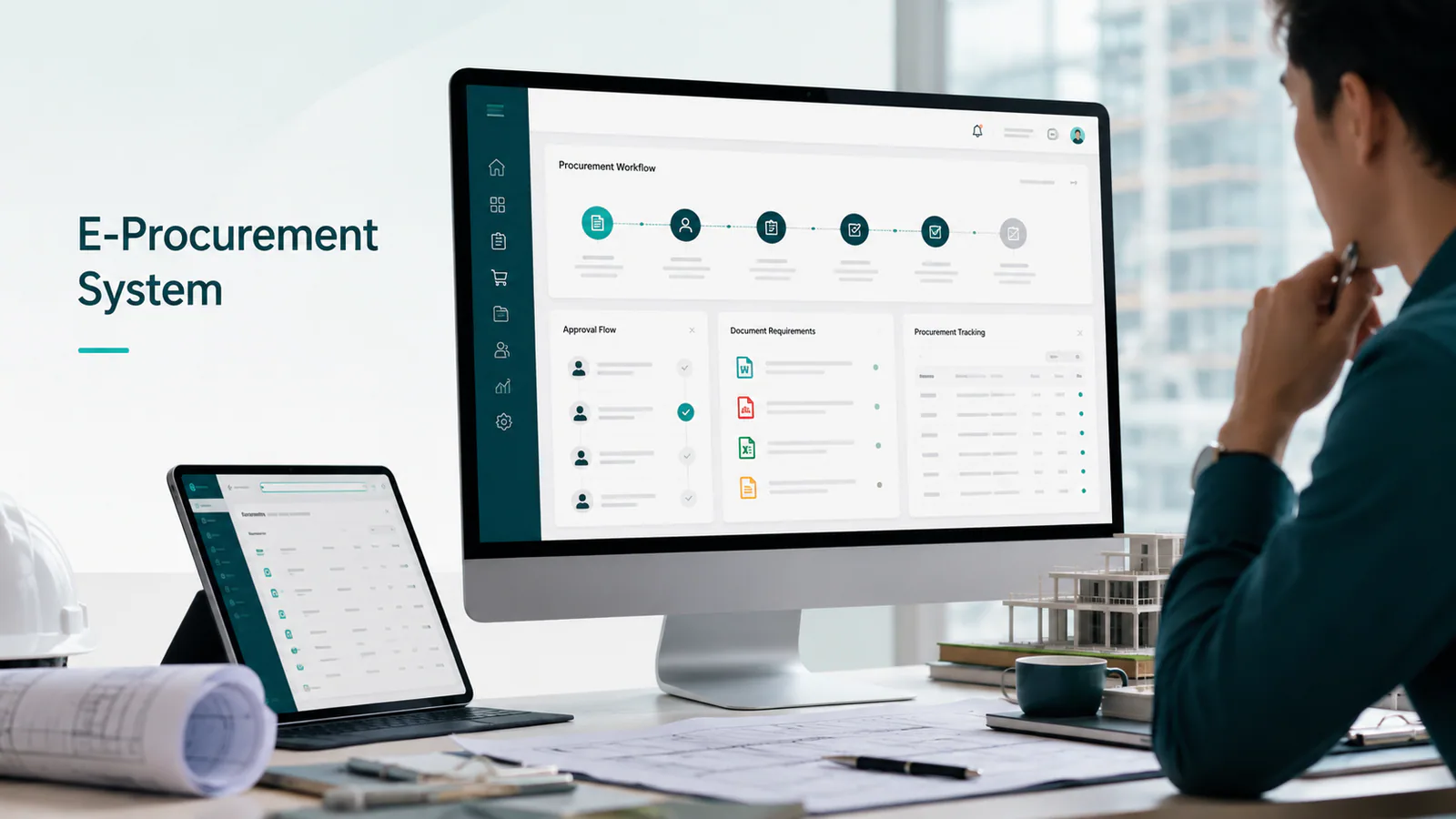
Analyzed and designed Hutama Karya Infrastruktur’s procurement digitalization, covering procurement requests, vendors, tenders, evaluations, approvals, contracts, purchase orders, delivery, invoicing, and vendor performance, with integration requirements for the existing enterprise landscape.
Project overview
Hutama Karya Infrastruktur required a more structured and controllable digital procurement process, connecting tender flows, documents, evaluations, approvals, contracts, and downstream procurement activities.
I worked as a Business & System Analyst in a five-person team. My responsibility was to translate business processes and stakeholder needs into a system design that could serve as an implementation reference for the development team.
The value of the project was not simply producing specifications, but bringing procurement workflows, vendors, evaluations, approval authority, and process traceability into one controlled and auditable enterprise design.
Procurement & tender workflow
The design covered procurement requests, budgeting, vendor registration and qualification, tenders, quotations, technical and commercial evaluations, negotiation, approvals, contracts, purchase orders, delivery/progress, invoicing/payment, and vendor performance.
Approval & governance
Multi-level approvals were designed around procurement value, organizational unit, role, and authority. Status history and audit trail requirements were defined for traceability.
Enterprise integration context
Hutama Karya Infrastruktur already operated within an SAP landscape. The project therefore considered procurement-specific requirements and integration with the existing enterprise environment. Commercial or SAP customization constraints are intentionally not stated as facts because those details were not confirmed.
Design through UAT
I conducted requirement gathering, produced analysis and design artifacts, prepared test cases, and supported UAT. My scope ended at analysis/design and validation support, not coding or production deployment.
Outcome
The design made procurement, approvals, documentation, and monitoring more manageable while giving the technical team a clearer implementation reference.
Modules & scope
- Procurement Request & Budgeting
Design of procurement needs, budget context, and control points before tendering begins.
- Vendor Registration & Qualification
Vendor data structures, administrative completeness, qualification, and supporting documents.
- Tender, RFQ/RFP & Quotation
Tender flow, request for quotation/proposal, quotation submission, and process status.
- Technical & Commercial Evaluation
Technical and commercial evaluation as the basis for procurement selection and decisions.
- Negotiation
Workflow for recording negotiation activities and outcomes before final decisions.
- Multi-Level Approval
Approval rules based on value, organizational unit, position, and authority.
- Contract & Purchase Order
Contract and PO design following approved procurement outcomes.
- Delivery / Progress
Monitoring fulfillment or progress after PO/contract issuance.
- Invoice & Payment
Data points and workflow requirements for invoicing/payment and related enterprise processes.
- Vendor Performance
Vendor performance evaluation structures after procurement execution.
- Document Management
Legal documents, quotations, evaluations, minutes, contracts, and purchase orders included in the process design.
- Status History & Audit Trail
Traceability of changes, statuses, decisions, and approvals.
- Enterprise Integration
Integration specifications for the existing enterprise environment, including the SAP context.
- Analysis & Design Deliverables
BRD, FSD, TSD, BPMN/activity diagrams, use cases, ERD, mockups, integration specifications, test cases, and user manuals.
- UAT Support
Support for validating the design and test scenarios with users and stakeholders.
Outcomes & benefits
- More manageable procurement workflow
Requests, vendors, tenders, evaluations, approvals, contracts, POs, and downstream activities were mapped into one process design.
- Clearer and traceable approvals
Approval authority, status history, and audit trail requirements were explicitly defined.
- More structured procurement documents
Vendor documents, quotations, evaluations, minutes, contracts, and POs were placed within a clear process context.
- Better enterprise integration readiness
Integration needs for the existing enterprise landscape, including the SAP context, were documented in integration specifications.
- Stronger implementation reference
The technical team received BRD/FSD/TSD, diagrams, ERD, mockups, integration specifications, test cases, and user manuals as implementation guidance.