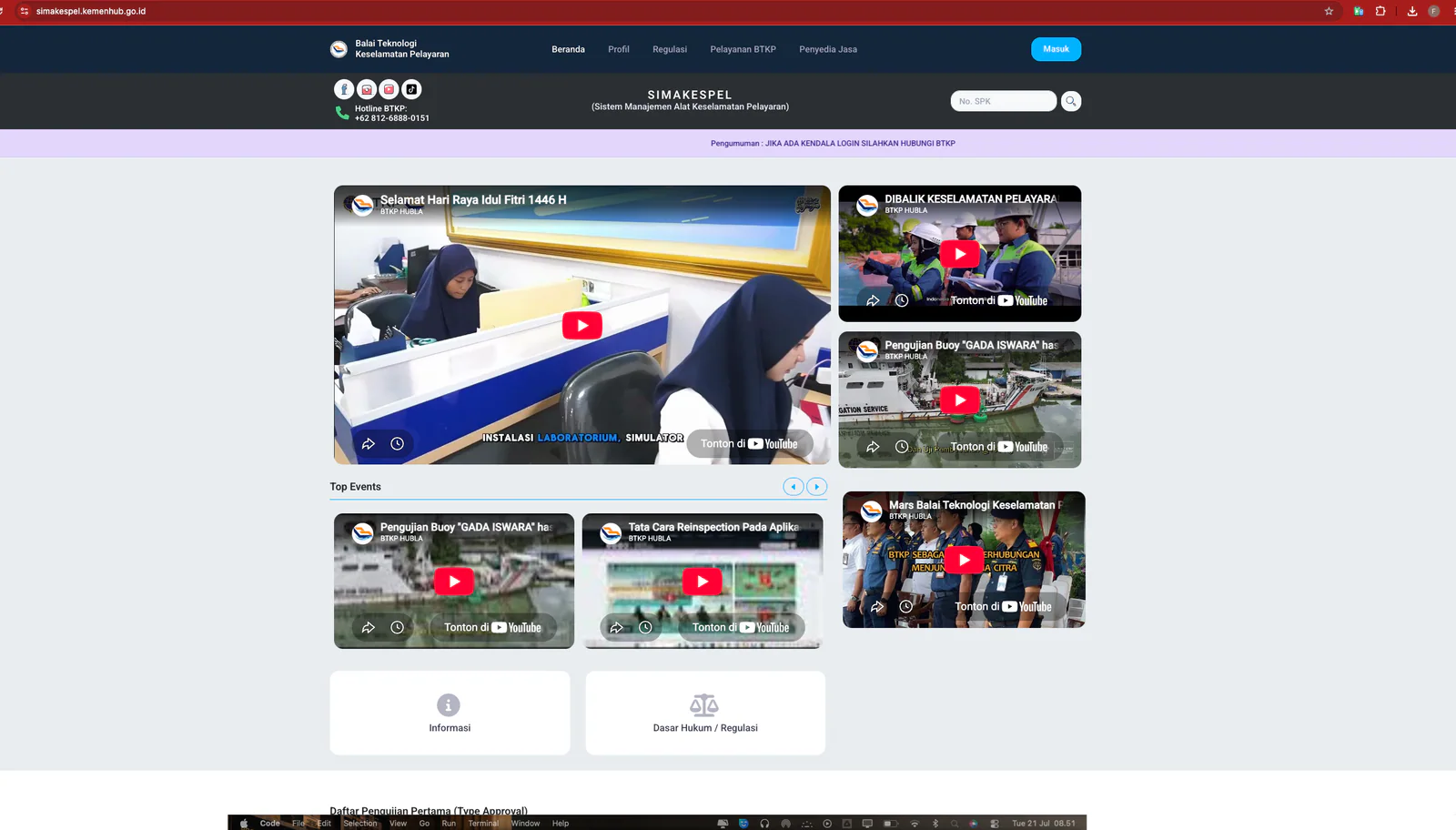
SIMAKESPEL — Maritime Safety Service, Inspection & Licensing System
Designed SIMAKESPEL in 2018 as the foundation for online maritime safety equipment service and testing, then returned as System Analyst for the follow-up development project in 2019.
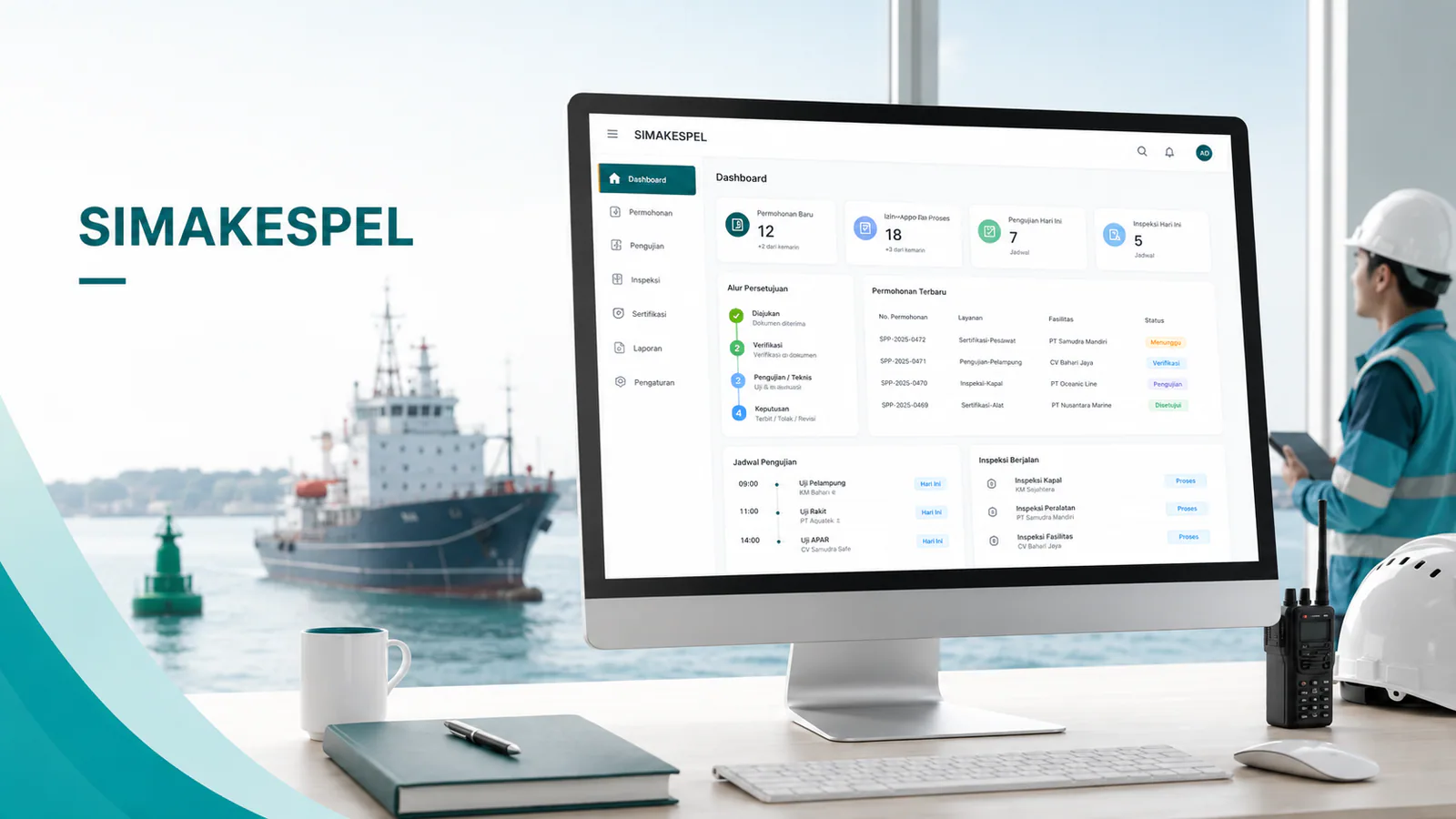
Project overview
Two contracts, one system journey
SIMAKESPEL digitized maritime safety equipment service and testing processes for the Maritime Safety Technology Center (BTKP), Directorate General of Sea Transportation, Ministry of Transportation.
The work was delivered through two separate projects/contracts. The first phase, 1 July–30 September 2018, focused on system design. The second phase, 1 July–30 September 2019, continued with system development. The documented position in both contracts was System Analyst.
Core value: translating a multi-stakeholder maritime safety service involving data, documents, inspection, licensing, and government payments into a more structured and traceable digital workflow.
Phase 1 — System design in 2018
The first phase focused on understanding the service journey, actors, required data, verification points, vessel and safety-equipment relationships, service-station capabilities, testing results, status transitions, and service documents.
Phase 2 — Development in 2019
In 2019, BTKP issued a second contract for the development of the online maritime safety equipment service and testing application. I was again documented as System Analyst, preserving continuity from the 2018 design phase into the next development phase.
This public portfolio combines both phases into one case study while the portfolio master keeps the two contracts as separate project records.
Modules & scope
System scope
- Online service workflow.
Application, completeness review, verification, approval, process status, issuance, and reporting.
- Service station & capability.
Company/workshop data, documents, service capability, and maritime-safety service relationships.
- Vessels & safety equipment.
Vessel records, safety equipment, serial identity, testing requirements, inspection results, and service history.
- Periodic testing & inspection.
Testing requests, result review, technical verification, service documents, and periodic history.
- PNBP & payment.
Billing and payment as part of the service journey before result/document issuance.
- Traceability & reporting.
Status, history, documents, and service data structured for monitoring and follow-up.
My role
- System Analyst for the 2018 design contract.
- System Analyst for the 2019 development contract.
- Mapped service processes, actors, data, documents, status transitions, and business rules.
- Translated stakeholder requirements into system design and development references.
- Maintained requirement continuity between the design and development phases.
Outcomes & benefits
Results & value
- Clear continuity across two project phases.
The 2018 design phase provided context for continued development in 2019.
- More structured service workflow.
Application, verification, testing, payment, issuance, and reporting were mapped as one service journey.
- More connected service data.
Service stations, vessels, safety equipment, testing results, payments, and documents were placed in a clearer data context.
- Better traceability.
Process status, verification results, and follow-up could be represented through service status and history.
- Supports cross-region access.
Digitization reduced dependence on physical document movement and manual communication.
Project gallery